





Quick Answer
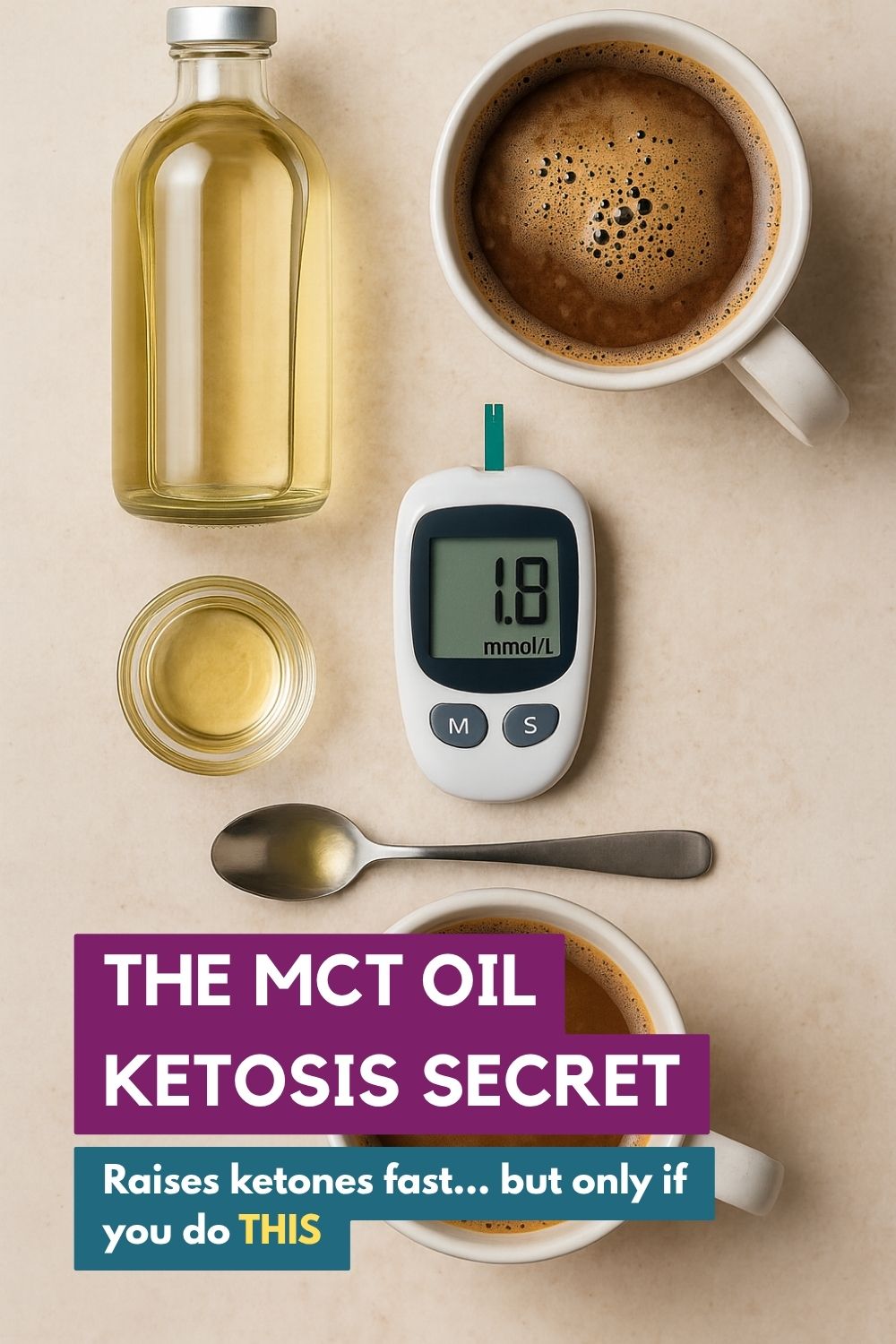
MCT oil—especially high-purity C8 (caprylic acid)—can significantly boost blood ketone levels within minutes, making it a valuable keto-friendly fat source. However, it’s not “magic”: the effect is short-lived, dose-dependent, and less potent than fasting or carb restriction. It’s best viewed as a tool—not a shortcut—for enhancing ketosis.
What Causes Ketone Production From MCT Oil?
Ketone production from MCT oil hinges on its unique fatty acid structure. Medium-chain triglycerides (MCTs) are fats with chain lengths of 6–12 carbon atoms. Unlike long-chain fats, MCTs skip the lymphatic system and go straight to the liver, where they’re rapidly converted into energy or ketones. This direct routing makes MCTs especially ketogenic—particularly C8 (caprylic acid) and to a lesser extent C10 (capric acid).
The Science Behind It
Rapid Absorption and Liver Metabolism
Most dietary fats must be emulsified with bile salts, packaged into chylomicrons, and slowly digested. MCTs defy this rule. Once consumed, they travel via the portal vein directly to the liver. This fast-track delivery makes them ideal substrates for ketogenesis—the conversion of fats into ketone bodies (mainly beta-hydroxybutyrate and acetoacetate).
Caprylic Acid (C8): The most ketogenic MCT. Studies show it can raise blood ketones by 3–4 times baseline within 30–60 minutes.
Capric Acid (C10): Moderate ketone generator—slower and less potent than C8.
Lauric Acid (C12): Sometimes classified as an MCT, but acts more like a long-chain fat—digested slowly with limited ketone production.
Exogenous-Like Effects
Though MCT oil isn’t technically an exogenous ketone supplement, its rapid conversion into ketones mimics one. It elevates circulating ketones without relying on carb restriction or fasting, offering a clean energy boost for the brain and muscles.
Comparisons With Similar Ingredients
| Fat Source | Ketogenic Potential | Digestion Speed | Notes |
|---|---|---|---|
| MCT Oil (C8) | ★★★★★ | Ultra-fast | Most potent natural ketone booster |
| Coconut Oil (50% C12) | ★★☆☆☆ | Slow | Minimal C8/C10 content |
| Butter | ★☆☆☆☆ | Slow | Mainly long-chain saturated fats |
| MCT Powder | ★★★★☆ | Moderate-fast | Easier on digestion, may include fillers |
| Exogenous Ketones | ★★★★★ | Instant | Pure ketone salts or esters |
Does It Impact Baking or Texture?
MCT oil isn't ideal for high-heat cooking or baking due to its low smoke point (~320°F / 160°C). It lacks structure and doesn’t solidify like butter or coconut oil, so it doesn’t contribute to crumb or rise in baked goods.
Best uses:
- Blending into smoothies or coffee
- Stirring into no-bake keto treats
- As a salad oil base
- In fat bombs for on-the-go energy
Avoid using it for frying or recipes where firm fats (like butter or coconut oil) are structurally essential.
Practical Tips to Solve or Leverage the Effect
- Choose Pure C8 for Ketone Boosting: Look for “caprylic acid” or “C8-only” oils for maximum impact.
- Start Low, Go Slow: Begin with ½ teaspoon to avoid GI upset—especially on an empty stomach.
- Use Strategically: Best before workouts, mental tasks, or during intermittent fasting for an energy lift.
- Combine With Fasting: Taking MCT oil while fasted can double the ketone boost effect.
- Don’t Overdo It: Over-reliance can lead to diarrhea, calorie surplus, or stalls in fat loss.
FAQ
Q1: Can MCT oil kick me out of ketosis?
No—quite the opposite. It usually increases ketone levels, especially if you're already fat-adapted.
Q2: Is coconut oil the same as MCT oil?
Not quite. Coconut oil contains MCTs but mostly lauric acid (C12), which isn’t rapidly converted into ketones.
Q3: Will MCT oil help with weight loss?
It may suppress appetite slightly and promote fat oxidation, but it's not a fat-loss miracle.
Q4: How fast does MCT oil raise ketones?
Within 30–60 minutes, especially with high-purity C8 on an empty stomach.
Q5: Can I cook with MCT oil?
It’s heat-sensitive—avoid frying or baking above 320°F. Use in raw or lightly heated recipes.
Conclusion
MCT oil is no magic bullet—but it’s also not just hype. As a ketogenic accelerator, particularly in its C8 form, it offers a measurable boost in blood ketones and clean-burning energy. Think of it as a reliable sidekick for your low-carb lifestyle—not a superhero replacement for good nutrition, fasting, and carb control.


Leave a Reply