







Historical Note (Added August 2025)
This article was first published in April 2017 and reflects our perspective at the time, back when keto was still finding its place in the mainstream. While much of the core information remains relevant, our understanding of ketosis — and the research behind it — has grown.
You can now also read our new, updated blog on ketosis, written after nearly a decade of living (and cycling) in and out of keto, right here. It shares fresh insights, lessons learned, and how our approach has evolved since this original piece.
The flood of ketosis
If you have been following keto-related papers, online articles, forums, and social media groups and sites, you might have noticed that there's a flood of information on ketosis out there. The tricky part is that some of the information is conflicting if not even contradicting. You can ask various experienced individuals, experts, and "experts" the very same question concerning ketosis and get as many different answers (or more!) as the number of people replying.

This article is not trying to solve the problem described above. What I'd like to do with it is give some hint about why one single question has so many different answers when it comes to ketogenic diet and ketosis. One thing is that science hasn't figured out all the underlying mechanisms of ketosis yet. The other thing is that the right answer (if there is such a thing) always depends on who's asking. What their background is, their body composition, lifestyle, their level of activity, genes, motivation, neurological health, psychological well-being, social support, and so on.
See, that is simply too many factors contributing to how an individual is going to react to being and staying in ketosis; It is almost impossible to offer anyone a straightforward answer!
One of the questions that I personally find the most compelling asks if it is necessary and optimal to remain in the state of ketosis continually to gain, regain, or keep a certain level of fitness and well-being (either physical or mental). The answer, as usual, is: It depends.
I am not going to provide reviews of scientific research here, although I shall lean on science. Neither am I about to give out any medical advice. I am just offering some of the clues that have arisen in the field of scientific and medical research as well as some clues based on the personal experience of fellow "ketonians" and myself.
But first, if you want to understand this article, although not highly scientific, you should at least basically know what ketosis is. You can read about it here, but to put it briefly: When you consume tiny amounts of carbohydrates (for an average person up to 50g a day), the body flips from one power source (sugar) to another (ketones). Fatty acids in the liver get converted to ketones which become the primary energy source for as long as blood sugar levels remain low.
Weight loss and ketosis
To get straight to the point: Fat burning is possible without being in ketosis. Just think of the Atkins diet. It allows more of protein intake than the classical ketogenic diet, but people have lost weight on that regime. With obese individuals, a guess is that weight loss does happen quicker on a classical, protein-restricted regime. That is probably because it promotes faster transition into ketosis, fat adaptation, water loss and so on.
Taking the first steps, it is of a big help that one stops consuming sugar, starch, and lowers the overall carb intake relatively drastically. On the other hand, one might sooner or later find themselves at a weight loss plateau, even though being fat-adapted and feeding mostly on fat. Moreover, they might have even lost some lean mass from not eating enough protein and/or from lack of exercise.
Some people refuse to believe it, but on a ketogenic diet, if you eat too many calories, it is hard to see weight-loss (even if consuming only 25 g carbs daily). And if those calories come mostly from fat, how is your body going to burn its own fat reserves?
The idea is that you should get an optimal amount of protein and exercise if trying to lose weight. When you get happy with how you look and what the scale shows, you can start eating to maintenance which means indulging in higher amounts of fat if you wish. The exact protein to fat ratio in any stage of fat-loss depends on the amount of exercise, the amount of body fat, your lifestyle, health status, current weight, metabolic functioning, and so on.
Listen to your body. And to a medical professional if necessary. This means that you might want and need to eat more protein occasionally to feel good, to lose weight, to exercise more efficiently ... Whether or not some additional protein will kick you out of ketosis from time to time is probably not the most relevant question when it comes to weight loss.
To not talk only about overweight individuals trying to lose weight, I see no reason why fit and very active people, or athletes if you wish, shouldn't flirt with a cyclical ketogenic diet. Been following some of such individuals and they've been doing great. The ones who have been doing it right (which is another topic I am not going to cover here) usually report no keto flu or any kind of feeling-like-crap after a carb-up. Being fat-adapted, they manage to flip back into ketosis in no time.
Ketosis and the brain
Ketosis makes the majority of us gain physical and mental well-being. That probably happens because a particular type of ketones does wonders to the body, especially inside of cells' mitochondria. With these ketones, there is an anti-inflammatory activity going on. This activity keeps our brains and bodies healthier for a longer period of time compared to the scenario where inhibition of the inflammation wouldn't happen.
When it comes to the brain's health and function, it is well known that, on a classical ketogenic regime, an excellent proportion of kids with refractory epilepsy get better and sometimes seizure-free. As for adults, ketosis seems to help some of them keep seizure frequency relatively low and promote quicker post-seizure recovery.
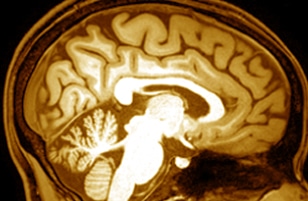
Further on, some individuals with bipolar disorder or Parkinson's disease seem to benefit from the state of ketosis. Supposedly, the level of ketones correlates with improved cognition in older adults and those with mild or moderate Alzheimer's. Moreover, many healthy individuals report clearer thinking and better overall cognitive functioning.
Chronic migraine sufferers globally report getting rid of attacks when being on a ketogenic or similar low-carb, gluten-free diet for a while. I am one of these people.
So what's the catch?
Why wouldn't one stay in a state of ketosis indefinitely? And does one actually need to stress about their ketone levels on a daily basis?
As I read articles on sites like Mark's daily apple (strongly recommend, BTW!), I learn some of the theory behind what I also notice myself when I experiment with food, exercise, and ketosis. I love Mark's Daily article on hormesis. Click and educate yourself because I won't dive deep into the subject.
Basically, hormesis is a kind of stress that helps us get stronger. That means that, although something that happens is highly stressful on us, we will grow out of this stressful event better equipped for similar incidents in the future. Ketosis is an example of such a stressful event. That might mean that being in ketosis for a long time without a break (we're probably talking years here) could mean prolonged stress on our bodies, which might turn a positive stressor (called ketosis in our case) into a negative stressor. For this reason, many people practice intermittent fasting instead of starving for days or weeks in a row.
Is My Sweet Keto in ketosis behind the scene?
At the beginning of this post, I promised no straightforward answers. So I am only giving you my personal share here:
What I like to mention in my other posts as well as in recipes' introductions, is that I don't stress about staying in ketosis indefinitely. I am a fit individual in my mid-thirties, exercising almost every day. I do not measure blood ketone levels and do believe I jump in and out of ketosis constantly.
Sometimes I do a few days of egg fast, which are probably my most ketogenic days that mostly help me prevent eating too much of dark chocolate on a daily basis. I feel pretty well on those days, but I thrive on protein and get hungry if too much fat (and not enough protein) fills up my daily caloric intake. I might be a weirdo in this regard, so no need to look up to me.
Sometimes, I kick myself out of ketosis in a cyclical kind of way. When I travel, I like to taste local food, so I switch to a sort of paleo way of eating. I do my best to stay gluten and sugar-free as doing so prevents health issues, including migraine attacks.
I do not do my best to stay in ketosis indefinitely, and I don't believe healthy individuals should unconditionally do so. If prolonged ketosis over several years is not a negative stressor then a constant worry about ketone levels could be. And as a psychologist, I recommend learning to deal with negative stressors. That might include eating berries now and then or choosing a day of the month (or week?) for your favorite sweet potato dish that you keep turning away from. Still, if you feel like staying in ketosis because it makes you feel the best you have ever felt, I am not saying you should start cycling or anyhow kicking yourself out of such a delightful state.
On the other hand, certain clinical population, like some neurological patients, needs to remain in ketosis to bring themselves to a healthier state and stay there. They should obviously do so under strict medical supervision. Besides, as is the case with anyone, these individuals, too, have different thresholds for carb and protein intake. So it is not necessary for each of them to indulge in only high fat, moderate to low protein and almost zero carb meals to remain health issue-free.
Great tool for great benefits
To conclude, I consider myself the luckiest person for discovering what prevents me from getting the nightmare-like 3-day lasting migraine attacks at least twice a month. And I don't have to continuously remain in ketosis to be this lucky. Plus, not being in ketosis all the time, does not make me any less fit.
If you feel only the state of ketosis works well for you, keep it on. And if you've never been in ketosis, I highly recommend trying out this "stressful event." Exercise and intermittent fasting might help you feel and look better, and jump into ketosis quicker. If you don't start feeling great after a week or two of being in ketosis, ask fellow ketonians for advice but keep listening to your body (and doctor). No-one should feel like crap for too long.


Tracy says
I have just started this keto thing and occasionally have questions. Who can i email easily and actually get a response??
My Sweet Keto says
Hi, Tracy. For getting quick replies I suggest joining a keto FB group or a couple of them ... Maybe start with "Ketogenic diet for beginners". Of course, in time you have to figure your own body out as we are all different and adapting differently to the lifestyle.